Warenkorb
Dein Warenkorb ist leer
Weiter einkaufen
Drawer menu
A Smart Meter for a balcony power plant is an intelligent digital electricity meter that records real-time measurement data and enables bidirectional communication with storage systems, inverters, and grid operators. Unlike classic bidirectional meters, a Smart Meter offers app control, zero export via external controllers like the Shelly Pro 3EM, and optimization of dynamic electricity tariffs (Tibber, aWATTar). The result: maximum cost savings, grid-friendly feed-in, and 2026 compliance for tenants and homeowners.
Check: Full-Black Solar Modules & Accessories
A Smart Meter is a digital electricity meter that – unlike analog or simple digital meters – continuously records consumption, self-generation, and grid feed-in in real time and transmits this data via radio (GPRS, LTE, PLC) to your grid operator. For balcony power plants, the Smart Meter acts as a central communication interface between your solar system, any possible storage system, and the electricity grid. While a classic meter only turns mechanically forwards or backward, a Smart Meter offers intelligent API interfaces for home automation and enables precise control of electricity flows – ideal for the decentralized energy transition.
A bidirectional meter mechanically records consumption and feed-in and stores the data on a time basis – without real-time feedback. A Smart Meter, on the other hand, communicates live: the meter sends measurements to your controller, storage, and cloud app every 15 minutes (or second by second upon request). This enables automatic zero export, dynamic tariff optimization, and remote control – functions that a bidirectional meter technically does not offer. For balcony power plants with battery storage systems such as the SunEnergyXT BK215 PLUS, a Smart Meter is therefore significantly more efficient.
Smart meters typically use three communication methods: Powerline Communication (PLC) via the power line itself, GPRS/LTE via the mobile network, or WLAN/Ethernet in modern installations. PLC is cost-effective and requires no additional cabling; GPRS/LTE offers range and security; WLAN enables local API integration with Home-Assistant or the SunEnergyXT App. The advantage: your balcony power plant system receives second-by-second updated meter data and can automatically adjust the output power or storage charge – crucial for zero export and intelligent tariff use.
Zero Export: The Smart Meter reports surplus production, an external controller (e.g., Shelly Pro 3EM) sends the signal to your inverter, which immediately throttles down – no manual switching required. Dynamic Tariffs: With Tibber or aWATTar, you receive new electricity prices hourly. Your Smart Meter + storage system automatically charges at low prices, discharges at high prices (e.g., 6:00 PM–9:00 PM at €0.40–€0.60/kWh) – up to 20–40% cost savings possible. Real-time Monitoring: App access to every production value and every grid feed-in. Storage Synergy: Intelligent batteries like the SunEnergyXT BK215 PLUS coordinate with Smart Meter data for optimal self-sufficiency. 2026 Compliance: New grid guidelines require zero export in many regions – Smart Meters make this future-proof.
Legally, a Smart Meter is not mandatory for balcony power plants until 2026. However, the Smart Meter rollout by grid operators will be successively expanded between 2025–2030, and many grid operators will require zero export for new installations from 2026 – which is much easier to implement with a Smart Meter. For tenants who use dynamic tariffs or live in grid-congested regions, a Smart Meter is already recommended today and quickly pays for itself through cost savings.
Before installing a Smart Meter, the following points should be met: Grid Operator Registration: Your balcony power plant must be registered with the grid operator – a Smart Meter is often only installed after this registration. Compatible Devices: Storage systems (e.g., SunEnergyXT BK215 PLUS, SunEnergyXT 500 series), microinverters (Deye SUN-M80G4-EU-Q0, APsystems EZ1-M), and external controllers (Shelly Pro 3EM for zero export) must be API-compatible. Network Connection: WLAN or Ethernet for communication between the meter and storage/app. Electrician Check: While plug-and-play installation is often not the case, a specialist should check the grid connection and safety. Rollout Status: Check if your grid operator already offers Smart Meters in your district.
“At DRBO Greenenergy, we support our customers from the very beginning: Our free consultations clarify whether a Smart Meter makes sense for your situation and which components are optimally compatible. With our pre-configured Smart Meter sets – e.g., the SunEnergyXT BK215 PLUS (€749) with a compatible inverter – or refurbished storage solutions starting from €600, we enable cost-conscious tenants and homeowners to enter intelligent solar use. Our local German support team assists with registration with the grid operator, integration of Shelly controllers, and optimization of dynamic tariffs. With Trustpilot 4.6/5 and 0% financing via OpenBank, the path to 2026-compliant zero export is simple and affordable."
Zero export means your balcony power plant feeds no or minimal electricity into the public grid. With a Smart Meter, the process is fully automatic: the meter continuously records the electricity flow. If your solar system produces more than you consume, the Smart Meter reports this surplus to an external controller (e.g., Shelly Pro 3EM, €80–€150). The controller immediately sends the signal to your microinverter (e.g., Deye SUN-M80G4-EU-Q0, €79.90), which then automatically reduces its output power – ideally to zero. At the same time, you optionally charge your battery storage (e.g., SunEnergyXT BK215 PLUS or refurbished Minjet storage) with the surplus instead of feeding it into the grid. This is grid-friendly, avoids blocking by grid operators, and maximizes your return through self-consumption.
Check: Watt to Amps Conversion Guide
Yes, absolutely – and this is one of the most valuable applications. With services like Tibber or aWATTar, your Smart Meter sends live production data to the app. At the same time, you receive hourly updated electricity prices. Your storage system (e.g., SunEnergyXT BK215 PLUS or B500) automatically charges at prices below €0.10/kWh and discharges during expensive hours (e.g., 6:00 PM–9:00 PM at €0.40–€0.60/kWh). Home-Assistant or the SunEnergyXT App even enable manual optimization, e.g., charging storage overnight at low prices. Realistic annual savings: €300–€500 with a combined setup of Smart Meter + 10 kWh storage + dynamic tariff.
| Scenario | Storage Size | Storage System | Dynamic Tariff | Estimated Annual Savings |
|---|---|---|---|---|
| Tenant without roof (balcony) | 2–4 kWh | SunEnergyXT BK215 PLUS (€749) | Tibber/aWATTar | €150–€250 |
| Tenant with terrace | 4–6 kWh | BK215 + B215 PLUS (€1,448) | Tibber/aWATTar | €250–€400 |
| Homeowner with roof | 10+ kWh | SunEnergyXT 500 (€1,299) + B500 Modules | Tibber/aWATTar | €400–€600 |
| Homeowner, cost-conscious | 4–6 kWh | Refurbished Minjet (€600) | Tibber/aWATTar | €200–€350 |
Mistake 1 – Self-installation of the Smart Meter: Many owners try to install the Smart Meter themselves. This is illegal and leads to loss of warranty, grid disconnection, or fines – always let the grid operator handle this. Mistake 2 – Incompatible Components: A used storage unit + any inverter will not automatically work with your Smart Meter. DRBO Greenenergy tests all combinations; check compatibility before purchasing. Mistake 3 – Zero Export without Calibration: A correctly calibrated controller is crucial – too aggressive throttling leads to yield losses, too weak to grid surplus. Mistake 4 – Ignoring Dynamic Tariffs: Many owners have a Smart Meter but do not use tariff optimization – cost savings are lost. Mistake 5 – Overlooking Local Rollout: Sometimes the Smart Meter is installed but cannot yet be activated. Check the status with your grid operator.
Yes, and especially recommended – with one important prerequisite. For rental apartments with a balcony or terrace, a Smart Meter is ideal, as external controllers (e.g., Shelly Pro 3EM) function completely plug-and-play and do not require an electrician. DRBO Greenenergy offers specialized tenant starter kits, e.g., the 1800 Wp complete set starting from €449, which is already Smart Meter compatible. Prerequisite: You have written permission from the landlord for the installation of the balcony power plant and external controller. With 0% financing via OpenBank, the system is quickly affordable, and profitability is realistic with 3–5 years of use.
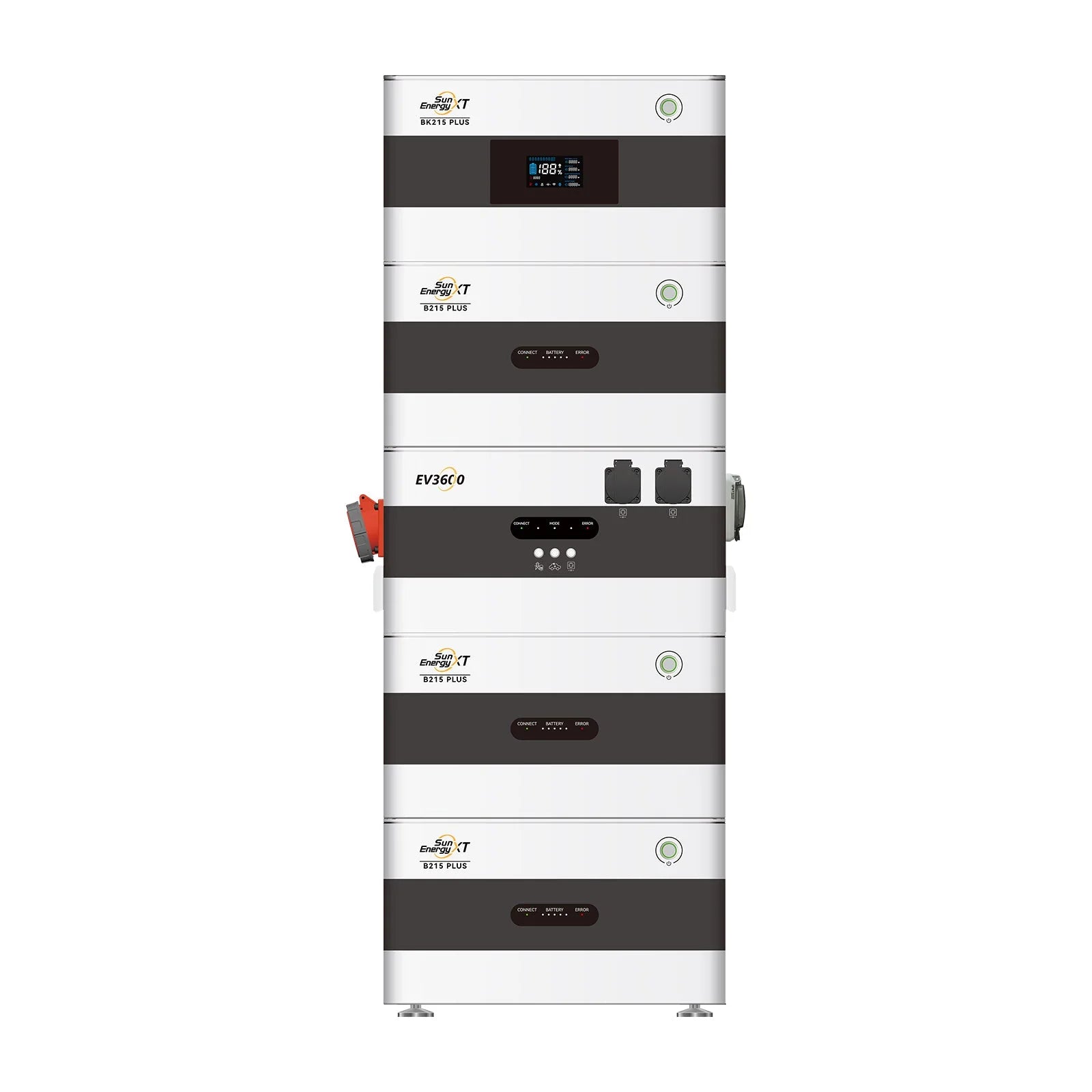
DRBO Greenenergy is an authorized dealer for several Smart Meter-compatible storage systems: SunEnergyXT BK215 PLUS (€749): 2.15 kWh head storage with LiFePO4 cells, expandable up to 17.2 kWh, compatible with Deye and SunEnergyXT inverters, delivery time 3–5 working days. SunEnergyXT B215 PLUS (€699): Expansion module for the BK215 system. SunEnergyXT 500 (€1,299): 5 kWh all-in-one system with integrated 800 W inverter, 4 MPPT trackers, and UPS emergency power operation, expandable up to 30 kWh, PRE-SALE with 6–8 weeks delivery time. SunEnergyXT 500 PRO (€1,349): Identical to 500, but 2,400 W output power instead of 800 W. Refurbished Storage: DRBO offers cost-effective Minjet storage units from €600 with 2,016 Wh and compatible inverters – ideal for budget-conscious tenants. All systems have 0% VAT for private individuals and delivery by freight forwarder to the curb (3–5 working days).
DRBO Greenenergy recommends the following Smart Meter-compatible microinverters: Deye SUN-M80G4-EU-Q0 (€79.90): 800 W, 96.5% efficiency, integrated WLAN (no Bluetooth), 15 years warranty, 2 MPPT – can be combined with Shelly Pro 3EM for zero export. APsystems EZ1-M (€104.90): 800 W, 97.3% efficiency, WLAN + Bluetooth, 2 independent MPPTs, requires DTU-W100 Pro for remote control – also combinable with Shelly. SunEnergyXT EV3600 (€799): Bidirectional inverter specifically for BK215 systems, enables charging + feeding in both directions – optimal for storage with dynamic tariffs. All these inverters communicate via WLAN/API with Smart Meters and external controllers.
A Smart Meter for a balcony power plant is much more than just an intelligent meter – it is the communication hub for grid-friendly, profitable solar use in 2026 and beyond. Through real-time data acquisition, automatic zero export, storage integration, and dynamic tariff optimization, a Smart Meter enables realistic cost savings of €300–€500 per year. For tenants, it offers plug-and-play solutions without roof space; for homeowners, maximum self-sufficiency and grid-friendliness.
DRBO Greenenergy accompanies you on this journey: With pre-configured Smart Meter sets (SunEnergyXT BK215 PLUS + Shelly + compatible inverters), refurbished cost-effective storage solutions, 0% financing via OpenBank, and free personal consultation. The local German support team helps with grid operator registration, compatibility checks, and zero export calibration – all with a Trustpilot 4.6/5 rating and fast 3–5 day delivery. Start your decentralized energy transition now – with a Smart Meter, storage, and DRBO Greenenergy as a reliable partner.
A: No, until 2026, a Smart Meter is not legally mandatory. However, zero export will become mandatory in many regions from 2026 – Smart Meters make this automatic and future-proof. For tenants with storage or users of dynamic tariffs, a Smart Meter quickly pays for itself through cost savings (€200–€400 per year).
A: No – only your grid operator is allowed to install the Smart Meter. However, you can already use external devices (e.g., Shelly Pro 3EM) in parallel and register for the rollout. DRBO Greenenergy supports you free of charge.
A: Yes, the SunEnergyXT BK215 PLUS, B215 PLUS, and 500 series are compatible with all modern Smart Meters, as long as the inverters (e.g., Deye, APsystems, SunEnergyXT EV3600) and external controllers (Shelly Pro 3EM) are correctly configured. DRBO tests every combination.
A: Entry-level setup for tenants: SunEnergyXT BK215 PLUS (€749) + Deye inverter (€79.90) + Shelly Pro 3EM (€80–€150) = approx. €1,000–€1,100. With 0% financing via OpenBank from approx. €90/month. Refurbished options reduce costs by 30–40%.
A: Yes – with an external Smart Meter controller (e.g., Shelly Pro 3EM, €80–€150) and a compatible inverter, you can achieve zero export even without a battery storage unit. However, storage optimizes the return by maximizing self-consumption by an additional €100–€200 per year.
Persönliche Fachberatung
