Warenkorb
Dein Warenkorb ist leer
Weiter einkaufen
Drawer menu
Dynamic power control automatically adjusts the output power of your balcony power plant to your current electricity consumption – controlled by meter communication via a bidirectional meter and smart devices like Shelly Pro 3EM. In combination with a storage unit like the SunEnergyXT BK215 PLUS and dynamic tariffs (Tibber, aWATTar), you can optimize your self-consumption by up to 90 percent and permanently reduce electricity costs by 30 to 40 percent.
Check: Solar Racking Spare Parts
Dynamic power control enables real-time adjustment of inverter output power based on current household consumption. While classic balcony power plants feed in a fixed 600 to 800 watts or switch off completely, dynamic systems modulate flexibly between 0 and their maximum power. The key advantage: zero feed-in becomes possible – your storage system buffers surpluses, while the inverter reduces export to the grid to virtually zero.
| Feature | Standard Balcony Power Plant | Dynamic Power Control |
|---|---|---|
| Output Power | Fixed (600–800 W) or off | 0–4,000+ W adjustable |
| Zero Feed-in | No | Yes with storage |
| Meter Communication | Optional | Required |
| Dynamic Tariff Compatibility | Limited | Fully optimized |
| Self-consumption Rate | 60–70 percent | 80–95 percent |
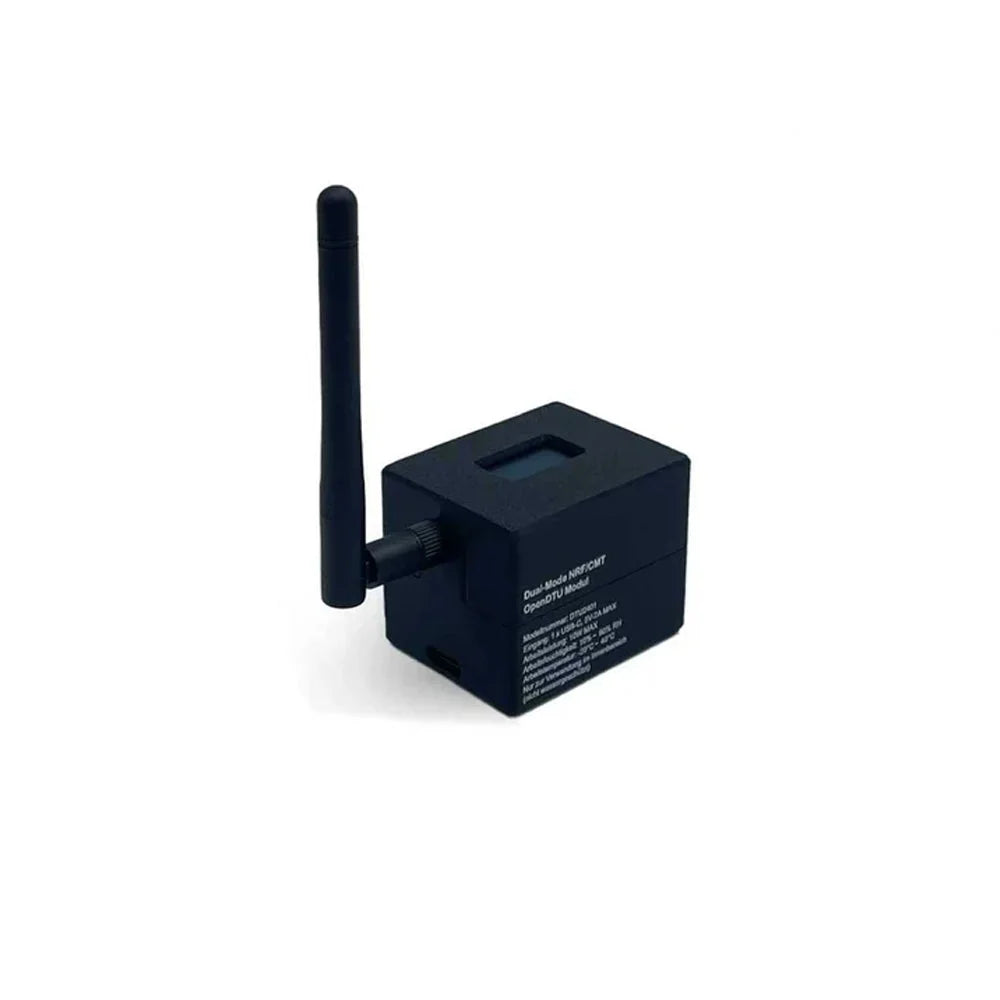
For a functioning system, you need four core components: an inverter with a control module (such as SunEnergyXT BK215 PLUS or the 500 series), a meter interface like Shelly Pro 3EM for real-time power flow measurement, a storage system for buffering (SunEnergyXT 500 series or smaller solutions from 5 kWh), and optionally a smart home hub like Home Assistant. The bidirectional meter is installed by the grid operator and communicates with your devices via standardized protocols.
The data flow is as follows: The bidirectional meter continuously records your current household consumption in watts and transmits these measured values to Shelly Pro 3EM. This device processes the data and sends control signals to your inverter, which then adjusts its output power. The typical latency is 100 to 500 milliseconds – sufficient for stable control without grid feedback. In zero feed-in mode, the system continuously measures and limits export to virtually zero watts.
With dynamic power control, you achieve self-consumption rates of 80 to 95 percent instead of the usual 60 to 70 percent. Your storage unit buffers peak loads, while the inverter selectively charges during favorable periods. With dynamic tariffs like Tibber or aWATTar, you significantly reduce your electricity costs – from an average of 35 cents per kilowatt-hour to 8 cents per kilowatt-hour during cheap hours. The combination enables a payback period of just 3 to 5 years instead of 6 to 8 years without storage.
Step one: The grid operator installs a bidirectional meter. Step two: You install Shelly Pro 3EM in your distribution board in front of the inverter and connect it via WiFi or LAN. Step three: In the inverter app (e.g., SunEnergyXT BK215 App) or Home Assistant, add Shelly as a data source. Step four: Configure the control logic – for example, "throttle the inverter to 500 watts if consumption is below 1,000 watts." Step five: Optionally integrate a dynamic tariff via the Tibber app. Step six: You perform a test run and monitor for stable zero feed-in for the first week.
Check: Configurable Balcony Solar Bundles
DRBO Greenenergy Expert Views: DRBO Greenenergy's German-speaking support team assists you every step of the way. Setup with professional advice takes approximately 2 to 4 hours. DRBO offers free solar consultation specifically for dynamic systems – here you can find out which components suit your living situation and budget. The company works with SunEnergyXT and has years of experience integrating intelligent storage systems for renters and homeowners. Many customers report smooth communication and quick problem solving – which is reflected in their Trustpilot rating of 4.6 out of 5 stars.
The SunEnergyXT 500 series is fully integrated into dynamic systems, offers native Modbus support, and is scalable from 5 to 17.2 kilowatt-hours. The SunEnergyXT BK215 PLUS (price at DRBO: 749 Euros) is a budget solution for renters with app access and meter communication, but has a lower capacity. Anker and EcoFlow systems partially work via Home Assistant but require more configuration effort. DRBO Greenenergy also offers refurbished storage units – ideal for cost-conscious buyers with full functionality and 0% financing.
Solar Package I mandates zero feed-in in certain grid areas and promotes bidirectional meters. The DIN VDE 4105-1 standard regulates grid protection – your inverter must shut down in the event of grid faults, even with dynamic control. In multi-family homes (e.g., in Bavaria or North Rhine-Westphalia), zero feed-in is often a prerequisite – dynamic systems enable this compliance without expensive retrofitting. While zero feed-in eliminates the EEG feed-in tariff, free self-consumption plus dynamic tariff savings amortize this in a few years.
A basic setup without storage (SunEnergyXT BK215 PLUS plus Shelly Pro 3EM) costs approximately 1,200 to 1,500 Euros. A complete system with storage (SunEnergyXT 500 series, 17 kilowatt-hours) costs 3,200 to 4,500 Euros – DRBO Greenenergy offers a Dynamic Starter PLUS Set for 3,199 Euros. A refurbished option for renters starts at about 1,500 to 2,000 Euros. DRBO offers 0% financing via OpenBank, making larger investments attractive. The payback period is 3 to 5 years through self-consumption optimization and dynamic tariff savings.
Dynamic power control with storage and dynamic tariffs is the future-oriented solution for balcony power plant users. You achieve self-consumption rates of over 90 percent, reduce electricity costs by 30 to 40 percent, and thus meet the current requirements of Solar Package I. Especially for renters, DRBO Greenenergy offers a low-threshold entry with its refurbished storage systems and free consultation. The local German-speaking support team makes technical setup transparent and understandable. With 0% financing and a Trustpilot rating of 4.6 stars, DRBO Greenenergy stands for reliability and customer proximity.
Yes, if you don't already have one. The grid operator must install a modern bidirectional meter (eMeter or iMeter) – often free of charge as part of Solar Package I. Communication then runs via Shelly Pro 3EM. DRBO Greenenergy helps with registration and coordination with your grid operator.
Yes – DRBO Greenenergy offers special renter plug-and-play sets with refurbished storage units (e.g., SunEnergyXT BK215 PLUS from 749 Euros). No permanent installation is necessary. The only requirement: the balcony or terrace must allow access to the house installation, or the landlord must agree.
An average of 30 to 40 percent cost savings through a combination of self-consumption (80–95 percent) and dynamic tariff savings. A 2-person household with 120 Euros in monthly electricity costs saves about 36 to 48 Euros per month – that's 432 to 576 Euros per year.
Challenging for beginners, but not impossible. DRBO Greenenergy offers free solar consultation and a local German support team. With their guidance, setup (Shelly configuration, inverter pairing) takes about 2 to 4 hours. Home Assistant users can find numerous community guides online.
Rule of thumb: 1 kilowatt-hour per 1,000 watts of installed inverter power. For a 3-kilowatt system, 3 kilowatt-hours are sufficient (e.g., SunEnergyXT 500 series, scalable from 5–17 kWh). For renters, 2 to 5 kilowatt-hours are often sufficient (e.g., SunEnergyXT BK215 PLUS).
Contact and Consultation: Let DRBO Greenenergy advise you free of charge and without obligation on your individual dynamic power control. The German-speaking team will help you find the right storage solution and components – with 0% financing for your investment in sustainable energy.
Persönliche Fachberatung
